
The SaaS Audit · Fixed-fee diagnostic
Keep what earns. Cut what doesn't.
A fixed-fee, expert-run audit of your SaaS stack — what to keep, what to cut, and what it's actually costing you. Run by senior architects with AI-native analysis, delivered as a scored readout you can act on. The fee is credited in full against your first engagement.
Fixed-fee diagnostic
Expert-run, AI-native
Scored readout
Credited to your first engagement
- 1
Intake (15 min)
Tell us your stack and where the spend hurts.
- 2
We run the audit
Senior architects score every tool with AI-native analysis.
- 3
Scored readout
A keep / cut / consolidate plan you can act on.
Not ready to book? Get a free savings estimate.
Give us the shape of your stack and we’ll send back an estimated annual savings range — no call required. It’s the fastest way to see whether the full audit is worth booking.
Most companies never decided to spend what they spend on software. The stack grew one reasonable purchase at a time: a CRM, a project tracker, a form builder, a dashboard tool, a thing that syncs the other things. Every tool earned its seat when it arrived. Almost nobody re-litigates the whole portfolio once AI enters the picture.
That is what this audit does. Not a vendor pitch, not a teardown of your systems of record. An honest look at which tools still earn their seats now that AI can carry work that used to require one.
How the audit works
A fixed-fee diagnostic run by senior architects — here’s how we score your stack and what the readout gives you back.
- 01
Map
List your stack with spend bands, seat counts, and the job each tool does. No contracts or financials required — spend bands and seat counts are enough.
- 02
Score
Each system gets scored on two axes: how much of its job AI can now carry, and how deeply it holds your business context. High-context systems of record score as keepers. Thin per-seat workflow tools get a hard look.
- 03
Sequence
You get a readout: a spend map by job-to-be-done, consolidation candidates ranked by risk, the places an AI layer raises output without touching your systems of record, and a 90-day order of operations.
The verdict grid
Every tool lands somewhere on two questions: how much of its job AI can now carry, and how deeply it holds your business context. Where it lands is the verdict — keep what earns, cut what doesn’t.
Systems of record
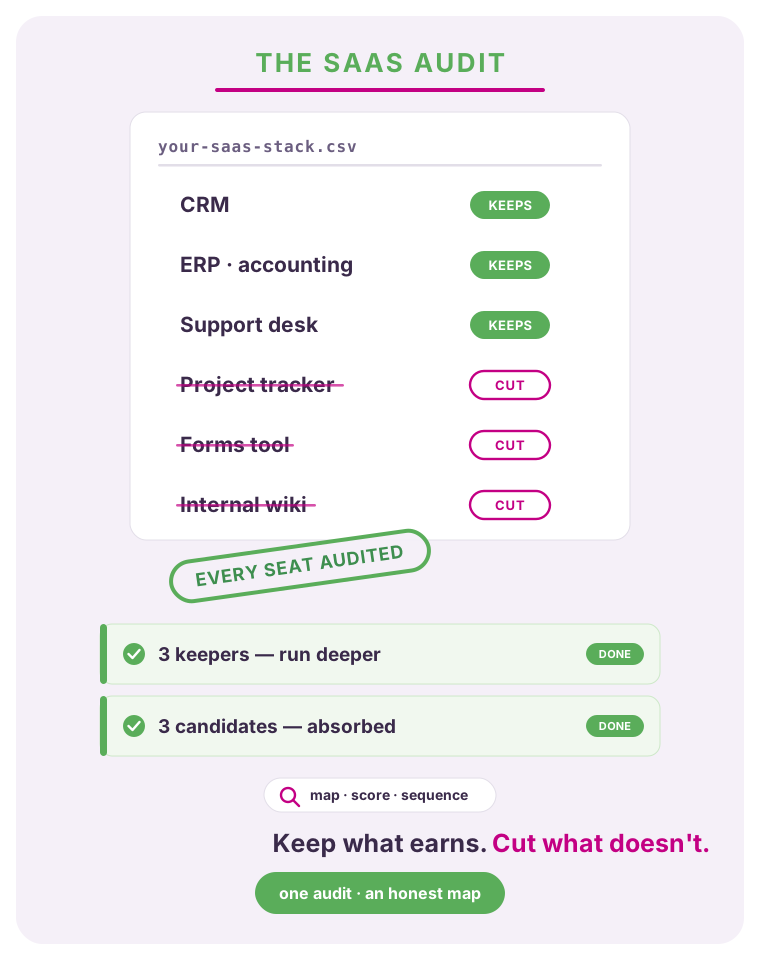
Salesforce, NetSuite, Workday, your ERP. They hold the business and AI can’t carry their job. These stay.
Context-rich, AI-amplified
High-context systems get more valuable once an AI layer reads from them. Keep the system, add the leverage on top.
Niche but sticky
Thin on context and hard for AI to replace outright. Keep the ones with a real job; question the rest at renewal.
Per-seat workflow tools
Thin on context and doing jobs AI now does better. This is the long tail the audit consolidates first.
Customer zero
75%
lower operating expense profile after we ran the audit on our own stack — with output up, not headcount down.
We ran this on ourselves first
We run our company on Claude and Notion. We did exactly this exercise on our own stack: mapped every tool, asked which ones still earned their seat, and rebuilt around an AI layer on top of a governed context layer — the same pattern behind our free Notion CRM template. Our operating expense profile came down 75% and the output went up to executive grade. The people did not go away. The busywork did. AI accelerated our team; it did not replace them.
What this is
An honest portfolio review of every tool you pay for, scored on two questions: how much of its job AI can now carry, and how deeply it holds your business context. Senior architects run it, not a survey and not a script. You get back a spend map organized by job-to-be-done, consolidation candidates ranked by switching risk, the specific places an AI layer raises output without touching your systems of record, and a 90-day order of operations.
Spend bands and seat counts are enough to start. No contracts, no financials. The readout lands within two business days and stands on its own whether or not you ever talk to us again, and the fee is credited in full against your first engagement.
What this is not
This is not a rip-and-replace pitch. Systems of record that hold your business — Salesforce, NetSuite, Workday, your ERP — usually stay, and usually get more valuable once AI can read from them. The audit is about the long tail: per-seat tools doing jobs AI now does better, and the workflow glue nobody would buy again today. It is the antidote to SaaS sprawl, not a reason to rebuild what already works.
Where the leverage shows up is the AI layer on top — Claude reading governed context through MCP so the systems you keep get more useful, not replaced. See how we run on Claude and Notion and how we build, and what an AI-native Notion workspace looks like once the busywork is gone.
If you’re the operator-leader asking the bigger question — not just what the stack costs, but how to run the whole company on AI — and how to make the AI you have already funded compound instead of stall — start with the AI operating system instead.
Book the SaaS Audit
Tell us about your stack to book the audit — a 15-minute intake, then our architects run it and deliver a scored readout within two business days. Fixed fee, scoped at intake, credited in full against your first engagement. No contracts or financials required — spend bands and seat counts are enough.
Frequently asked questions
What does the audit cost?
How long does it take?
Do I have to share contracts or financials?
What happens to Salesforce or our ERP?
Is this just a sales funnel?
Who should run it?
See where AI changes the math on your stack
Book the fixed-fee audit for a scored readout you can act on — the fee is credited against your first engagement. Not ready? Get a free savings estimate first.